
By Davis Coen
Photos by Adam Smith
When photographer Adam Smith stepped into Junior Kimbrough’s juke joint for the first time in 1994, the Ole Miss sophomore stood in directly in front of the legendary bluesman – and something inside him shifted. Amid the sweat, the stomp, and the pulse of Hill Country blues, he felt what he now calls a “come-to-Jesus moment,” realizing that if he could capture even a fraction of that passion on film, he had found his life’s work.
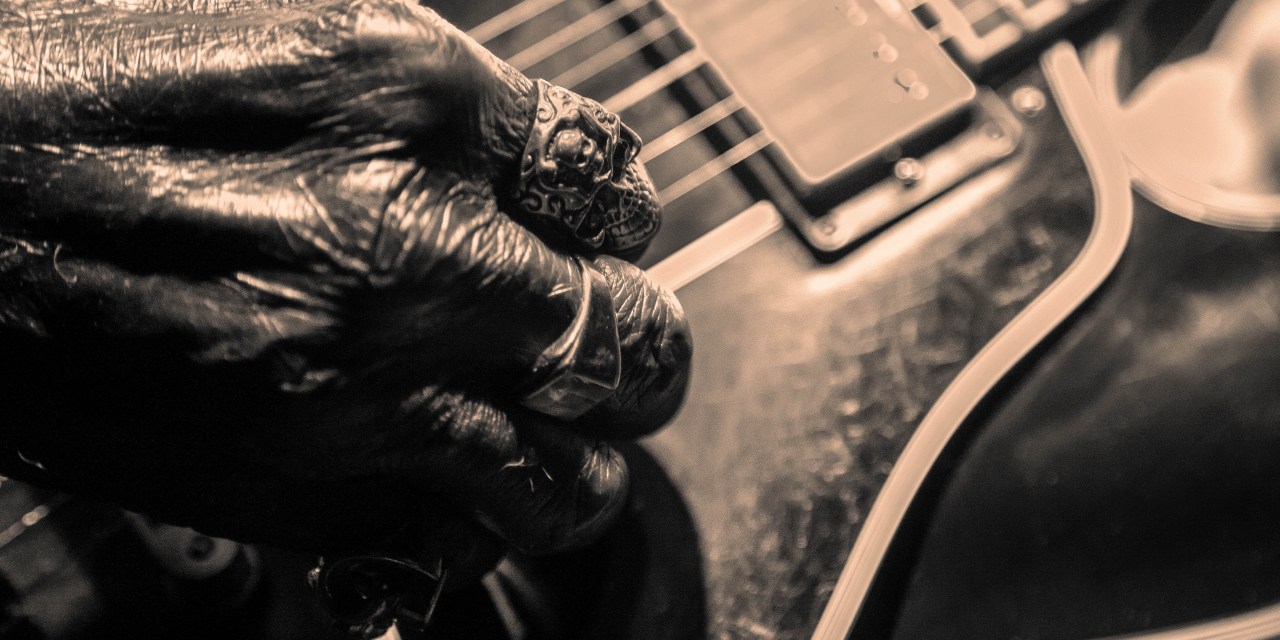
Nearly thirty years later, Smith has become a highly respected visual chronicler of the American South. His photography – clear-eyed, soulful, and steeped in the cultural landscape – is on display in Water Valley at This Is Noteworthy (TIN), where a special exhibition runs through December 13, culminating in a closing event with a gallery talk and music by Cam Kimbrough.
A Career Rooted in the Hill Country
Born and raised in Macon, Georgia, Smith arrived at Ole Miss with a secondhand Canon film camera and a growing curiosity. A chance act of generosity from professor Tom Rankin, who let him into a full photography class, set his path. Rankin then pointed him toward Junior Kimbrough’s place in Marshall County.
That night introduced Smith not just to a sound but to a world – one he would spend decades documenting. His early portraits of North Mississippi blues icons, including R.L. Burnside, Othar Turner, T-Model Ford, and Paul “Wine” Jones, have since become defining images of musicians who helped shape the region. His portfolio, now considered essential documentation of Hill Country culture, blends striking shadow, and a sense of space that feels both intimate and expansive.
From Juke Joints to International Recognition
What began in a small club on Highway 4 eventually brought Smith to stages and backroads across the South and beyond. His relationships with musicians – from the North Mississippi Allstars to Drive-By Truckers and Lucero – grew naturally, often beginning with hospitality and friendship long before anyone was famous.
His work has appeared in album art, books, exhibitions, and major public events. This past August he mounted the largest show of his life at the Oriental Theater in Denver, exhibiting 60 pieces with live performances from musicians he’d photographed and championed for years.
But Smith’s approach has remained unchanged since those early darkroom days, and has always been through compassion, and deep respect for the people and landscapes of the South.
A Return Home
After nearly two decades in Atlanta, Smith recently returned to Oxford in search of something simple: community.
“I realized I still had more friends here than anywhere,” he said. “Writers, musicians, people I’ve known forever. It felt like the right place to start fresh.”
Shortly after settling back in, he reconnected with longtime friends Tim and Susan Lee, founders of TIN, a nonprofit that empowers artists and bridges cultural gaps in underserved Southern communities. Their work has generated over 900 jobs, supported thousands of musicians and creatives, and engaged students across the South.
The Lees invited Smith to mount an exhibition at their Water Valley event space, one that coincided with his return and allowed him to showcase a large body of work still framed from his Denver show. The arrangement is artist-friendly and TIN took no commission, provided a stipend to help him hang the show, and supported the exhibition during the Water Valley Art Crawl.
Craftsmanship and Family Roots
Every frame in the exhibition carries another layer of the Southern story. Smith’s family operates a historic woodworking mill in Macon, Georgia – founded in 1883 and still producing hand-run architectural moldings. His brother now oversees the mill, and the custom frames crafted there give the show a personal, intergenerational touch.
The exhibition remains open at TIN through December 13, when Smith will join visitors for a gallery talk accompanied by music from Cam Kimbrough, grandson of Junior Kimbrough – bringing Smith’s career full circle, back to the music that ignited it.
In many ways, it’s a homecoming – a return not just to Oxford and Water Valley but to the very beginning of Smith’s personal and artistic journey.
And for Smith, the return carries a deeper emotional resonance. “Coming back to Mississippi feels like picking up a conversation I started years ago,” he says. “The people, the music, the places – they’ve all shaped me. Showing this work here feels like bringing it home.”
He paused, then added, “At the end of the day, I’m just trying to honor the people who let me into their lives. If these photographs help keep their stories alive a little longer, then I’ve done what I set out to do.”
For more information or to schedule a viewing at TIN, email thisisnoteworthy2010@gmail.com, or dam@adamsmithphotography.com.